
Why Cozy Games Became Everyone’s Safe Space
From Stardew Valley and Animal Crossing to Spiritfarer and Infinity Nikki, a new wave of "cozy games" turned pixels into refuge. Soft worlds of farms, islands, houseboats, and fashion where players come back not to win, but to feel okay.

Picture this: it’s 11 PM. Your group chat has 87 unread messages. Your to-do list is longer than it was this morning. The news is doing what the news does. You open your phone, or your laptop, or your Switch, and suddenly you’re watering strawberries in a valley that doesn’t care about any of that. The stress doesn’t disappear. But for a moment, it steps back.
This is what cozy games do. And right now, more people than ever are letting them.
Okay but… what even makes a game “cozy”?
You’ve seen the word everywhere, but the vibe is actually more specific than it sounds. Cozy games are built around low-stakes mechanics and everyday activities: gardening, decorating, cooking, dress-up, running a tiny cafe nobody asked for but everyone loves. There’s no final boss waiting at the end. There’s barely a way to fail. The worlds are soft-colored, the soundtracks feel like a warm drink, and nothing in them is trying to kill you.
What they offer instead is rhythm. Small tasks. Visible progress. A place that remembers you showed up yesterday and rewards you for showing up today.
That design philosophy, which used to live quietly in the corner of gaming, started spreading fast. First to people who’d never called themselves gamers, then to therapists who began recommending specific titles, then to researchers who started studying why a farming sim could do what a meditation app couldn’t. Turns out there’s something in the low-pressure loop of cozy games that genuinely quiets the brain. Some people started calling it the meditation practice for people who hate meditating. That one stuck.
The island that held 2020 together

Animal Crossing: New Horizons launched March 20, 2020. Three days later, half the world went into lockdown. Nobody planned it that way, but the timing felt almost too perfect. Like Nintendo had quietly built a lifeboat before anyone knew the ship was sinking.
The game sold nearly twelve million copies in its first eleven days. In the Philippines, where the ECQ had just shut everything down, Filipinos were building islands while their cities stood still. Turnip trading became a social currency. Meteor shower nights became virtual hangouts. Players held graduation ceremonies and birthday parties on their islands because real life had cancelled the actual ones.
What Animal Crossing gave people wasn’t just escape. It was somewhere to put their days. A world with a daily rhythm: the shop opens, the flowers need watering, your neighbors leave little notes in your mailbox. In a year when time had stopped feeling real, the game kept track of it for you. That was the gift. Not fantasy, exactly. A softer version of normal, held in the palm of your hand.
The farm that taught people to try again

Stardew Valley had been out since 2016, but it found a second life, and then a third, and a fourth, every time the world got harder to be in.
The premise is almost aggressively humble: you inherit a rundown farm from your grandfather, move to a small town, and start over. There’s no countdown timer. No pressure. Just soil, seeds, and the slow satisfaction of watching something grow from nothing. When everything in real life feels unpredictable and unrewarding, the farm offers the opposite. A world where effort always means something, setbacks are temporary, and the grumpy neighbor eventually warms up if you keep leaving gifts outside his door.
Players started calling it a comfort game the way people call a specific meal comfort food. Gaming forums, TikToks, Reddit threads all full of the same story: I was burnt out, I was anxious, I was going through it, and then I picked up Stardew. The comparison to self-care started showing up in unexpected places, including actual therapy sessions where players were told their farm time was a legitimate coping mechanism. In Stardew, trying again costs nothing. That’s rarer than it sounds.
The boat that let you say goodbye

Spiritfarer is the one that’s hardest to explain without sounding like you’re overselling it.
You play as Stella, a ferry master who cooks, builds, farms, and tends to spirits as they prepare to cross to the afterlife. You learn what they like to eat. You build them the room they’ve always wanted. You sit with their long, wandering stories. And when the time comes, when they’re finally ready, you hug them one last time and let them go through the glowing door.
It’s a cozy game about dying. And somehow, that’s the most human thing about it.
Spiritfarer figured out that “safe space” doesn’t only mean comfortable. It can also mean honest. That soft aesthetics and gentle gameplay are capable of holding grief, not just joy. The game doesn’t rush you through loss. It asks you to make one more meal, sit on the deck a little longer, choose the right moment. There’s a reason players who had lost someone, or were bracing to, kept finding their way back to this game. It gave them a place to practice saying goodbye, without the stakes of the real thing.
A hospice nurse once shared that Spiritfarer helped her find language for what her job asked of her every day. A video game about ferrying cartoon animal spirits became, for her, a way to process the weight of being the person who stays while others leave. That’s not nothing. That’s everything.
The open world that runs on fashion
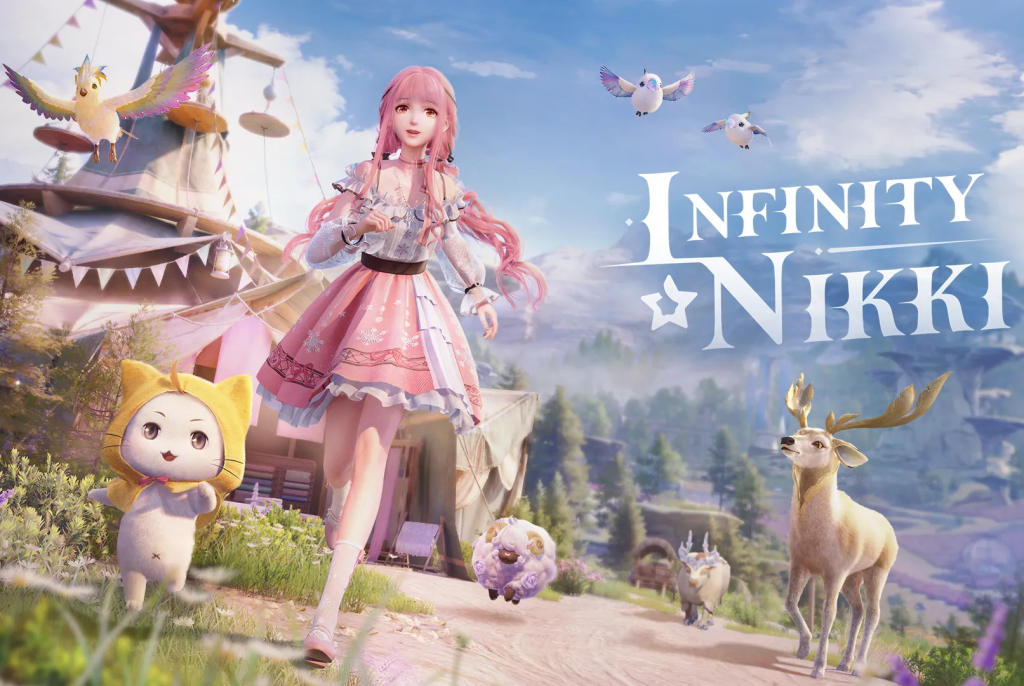
Then there’s Infinity Nikki, and the argument it makes for where cozy games are headed next.
The world is Miraland: open, enormous, and built like someone turned a Studio Ghibli film into a playground. You play as Nikki, exploring with her cat Momo, collecting outfits that aren’t just decorative but functional. A gliding dress to reach floating platforms. A purifying look to cleanse corrupted spaces. Fashion is literally the superpower here, and the game is completely serious about it.
It launched in December 2024 with over thirty million pre-registrations. A number that says cozy gaming has moved so far past niche that it’s now competing with the biggest releases in the industry. The development team included designers from Breath of the Wild, and it shows: the world is huge, the lighting is stunning, and wandering through it without any objective feels like something you’d do on purpose.
What Infinity Nikki adds to the cozy conversation is the centering of self-expression as the actual point. You don’t grind for power. Your progress is aesthetic. Your identity is the mechanic. For a generation that already treats their feed as a canvas and their outfit as a statement, a game that makes dressing up the whole adventure isn’t a guilty pleasure. It’s a natural conclusion.
Why we keep coming back

Across all four games, the same threads keep pulling. The need for routine when life won’t give you one. The relief of small decisions in a world full of enormous ones. The comfort of a place that waits for you without judgment. No notifications, no urgency, no one disappointed that you didn’t log on yesterday.
Cozy games don’t fix anything. They never promised to. What they offer is smaller and, somehow, more sustaining: a world where the only thing you have to do today is water your crops. Or check on your villagers. Or cook one more meal for a spirit who’s almost ready to leave. Or glide through a pastel sky in an outfit that took you three hours to put together and felt completely worth it.
They give you somewhere soft to land. And right now, with everything the way it is, that’s not a small thing to offer.
That might just be the whole point.